
Where Your Projects Stall: What the Messy Middle Reveals About How You Create
The place where momentum disappears often has a map you haven't learned to read yet

Special Offer! Before we begin today, I’m thrilled to share with you that Mariah Friend is offering my readers a discount on her book The Pattern Shop, which is a story for the misfits with stubborn curiosity who ask too many questions, who can’t seem to quell their wanderlust or belief that there’s more to life than this.
Most importantly, it’s for the ones who are brave enough to fly, despite the risk. Which is so many of you, my wonderful readers.
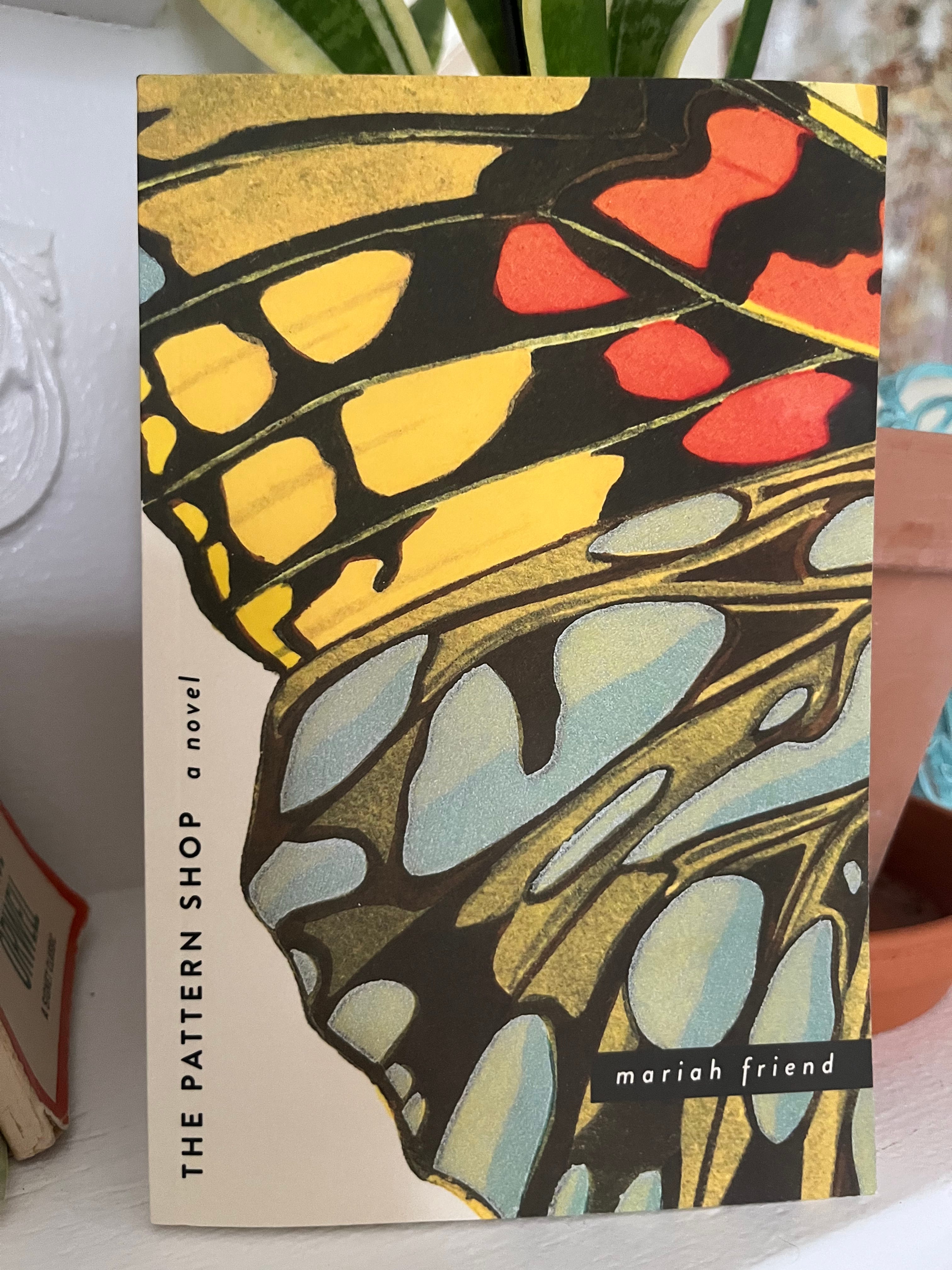
If the above quote lands for you, or you just want to learn more, the book is available at www.mariahfriend.com. Use code CreateMeFree for 20% off any purchase.
Now on to this week’s email …

You already have the answers to unblocking your creativity. Find them with the help of a Creative Health Map.
Most artists experience the messy middle as a mysterious fog: you can’t see the beginning anymore, the end isn’t visible, and you’ve lost your sense of whether the project is worth completing. What I’ve noticed across years of exploring how health shapes creativity is that the middle isn’t actually random. Where you stall, how you stall, and what moves you through all carry information about your creative process that becomes readable once you know what to look for.
The Difference Between Depletion and Disconnection
The messy middle can feel like a single experience, but it tends to arise from at least two distinct sources. Understanding which one you’re in changes what you need to do next.
Burnout affects everything. When you’re depleted, the middle stall shows up alongside exhaustion that doesn’t improve with rest, decreased productivity across all areas of your life, and a desire to escape or avoid not just this project but most responsibilities. The creative work feels heavy because everything feels heavy. The middle stall is a symptom, not the source.
Creative block tends to be project-specific. You might feel perfectly fine doing other tasks, even energetic for non-creative work, but when you sit down with this particular project, you experience a lack of fresh ideas, self-criticism about output, and anxiety around creative performance specifically. You’re stuck in the middle because something about the work itself has stopped flowing, not because you’ve run out of fuel entirely.
The approaches are different. Depletion needs rest and recovery before you can return. Disconnection needs investigation: what’s not working in the project, what relationship has been disrupted between you and the work. Treating one like the other tends to make things worse.
Read more about distinguishing burnout from creative block:

How Your Nervous System Shapes Where You Lose Momentum
The ability to create with ease is closely tied to your body’s sense of safety. Creative flow requires openness, presence, and emotional engagement. When your nervous system is regulated, meaning you’re within what’s called the “window of tolerance,” you can access curiosity, spontaneity, and the willingness to take creative risks. When you’re dysregulated, the middle becomes where everything stalls.
Dysregulation can show up in two directions. In hyperarousal (fight-or-flight states), you might experience the middle as frantic activity that produces nothing: racing thoughts, perfectionism, irritability, jumping between sections without finishing any of them. The work feels urgent and high-stakes. You’re moving, but not forward.
In hypoarousal (freeze states), the middle looks like difficulty starting, numbness when you sit down with the work, and what many artists describe as laziness but is actually the body’s protective shutdown. You might sit in front of your materials and feel nothing at all.
Many people try to force creativity while in a dysregulated state, only to become frustrated or ashamed when the work doesn’t come. The key is recognizing that creative readiness isn’t about discipline or willpower. It’s about whether your body feels safe enough to enter the vulnerable state that creative work requires. The middle stalls when that safety gets disrupted, whether by life stress, health fluctuations, or the emotional weight of what the project is asking you to confront.
Read more about nervous system regulation and creative flow:

The Integration Phase That Looks Like Being Stuck
Sometimes what feels like stalling is actually a necessary phase of integration. The beginning of a creative project tends to be all acquisition: gathering ideas, materials, momentum, possibilities. The middle is where those elements have to find their relationship to each other. This kind of pause isn’t stuck, even though it feels that way.
The middle often asks you to move from additive work to subtractive work. In the beginning, you’re adding to a blank page, building something from nothing. But at a certain point, you have accumulated so much, whether material, ideas, directions, or possibilities, that the work shifts. You have to start carving, editing, making choices about what stays and what goes.
This is where many creators struggle. The skills that served the beginning don’t serve the middle. Artists who are natural adders can feel lost when the project asks them to subtract. The middle stall might be signaling that your relationship to the work needs to change, not that the work itself is wrong.
Read more about the additive and subtractive phases of creative work:


How Health Patterns Correlate With Middle Stalls
I’ve noticed that artists’ relationships to the messy middle often correlate with their health patterns in ways that become visible once you start looking.
Some creators reliably stall at the same percentage point across different projects. Fifty percent completion. Seventy percent. Whatever the threshold, it’s consistent. This pattern often connects to energy rhythms: the initial energy carries you to a certain point, and when it dips, the project dips with it. Understanding your natural energy tides, when you feel most vibrant and when you tend to lose steam, can help you anticipate the middle before it arrives.
Other artists get stuck specifically when their symptoms flare. Depression tends to create middles that trail off without a clear end: no dramatic abandonment, just less and less engagement until the project fades. Anxiety tends to create middles full of revision without progress, the same ground covered again and again without moving forward, perfectionism masquerading as work.
Some artists have middles that correlate with seasonal patterns, menstrual cycles, medication changes, or life circumstances that affect their baseline capacity. When you map these correlations, the messy middle becomes less mysterious. You can start to predict when you’ll need more support, and you can stop blaming yourself for what’s actually a health pattern showing up in your creative work.
Read more about working with your mental health rhythms:

What Got You Through Before
Every finished project you’ve ever completed once had a messy middle. Something moved you through it. Remembering what that was can suggest what might help now.
For some artists, it was external structure: a deadline, a collaborator waiting on their contribution, an accountability relationship that created enough pressure to push through the middle’s inertia. For others, it was a breakthrough insight that reframed the project, making visible a solution that had been hidden. For still others, it was simply time: stepping away, working on something else, and returning to find that the middle had somehow resolved itself during the pause.
Whatever got you through before carries information about what you need. The artist who always finishes with deadlines might need to create artificial structure. The artist who always finishes after stepping away might need to trust the process of rest and return rather than trying to force continuous progress.
There’s also the question of what made previous middles easier or harder. Were you healthier during the projects you finished? More rested? Less stressed by external circumstances? The conditions that surrounded your completions and your abandonments tell a story about what your creative process actually requires, not what you wish it required or what productivity culture tells you it should require.
Read more about heightened self-awareness and the creative process:

The Signal Worth Investigating
Sometimes the messy middle is feedback about the project itself. Something structural isn’t working. The premise was flawed in a way that’s only become visible now that you’re deep enough into the work to see it. The scope expanded beyond what’s manageable. A decision you made early is creating friction now.
This kind of middle asks you to stop pushing forward and look back. What’s not working? What would need to change? The stuckness might be your creative instinct telling you that building more on top of what exists will only create more problems later.
The challenge is that this kind of assessment is hard to do from inside the middle itself. When you’re stuck, you lose perspective on whether you’re experiencing normal creative difficulty or genuine structural problems. This is where external eyes can help, whether from a trusted reader, a collaborator, or someone trained to see patterns in creative work.

From “I’m Stuck” to “I Recognize This Phase”
Understanding your own middle patterns transforms the experience. The fog becomes readable. The stall becomes data. You can start to differentiate between depletion, disconnection, integration, health fluctuations, and structural problems. Each has a different response, and none of them is “try harder.”
The messy middle stops being a sign that something is wrong with you or your project. It becomes a recognizable phase that you’ve navigated before and will navigate again, with strategies that match what’s actually happening rather than generic advice to push through. Read more about the psychology behind creative blocks:

Mapping Your Middle Patterns
If you sense that your relationship to creative process has patterns you haven’t fully mapped, including where you stall, why you stall, and what moves you through, that’s exactly what Creative Health Cartography surfaces. I look at how your health shapes how you create across six domains and deliver a personalized Creative Health Map that shows your whole process, messy middles included, and what they reveal about what you actually need to finish the work that matters to you.
From Other Writers on Substack:
With gratitude that you share your work juliette crane, Nancy Reddy, Erin Gregory, Vanessa Aldrich and Gregory Ng


Thanks for the article mention! Your post is a great resource for creatives navigating the challenges and ups and downs of building something new and authentic.
That novel looks well intriguing!!!