
Creativity Isn’t Just a Spark. It’s a Relationship. It's a Way of Being.
We talk so much about creative output, we can forget that creative being is something we carry even when the materials are untouched.

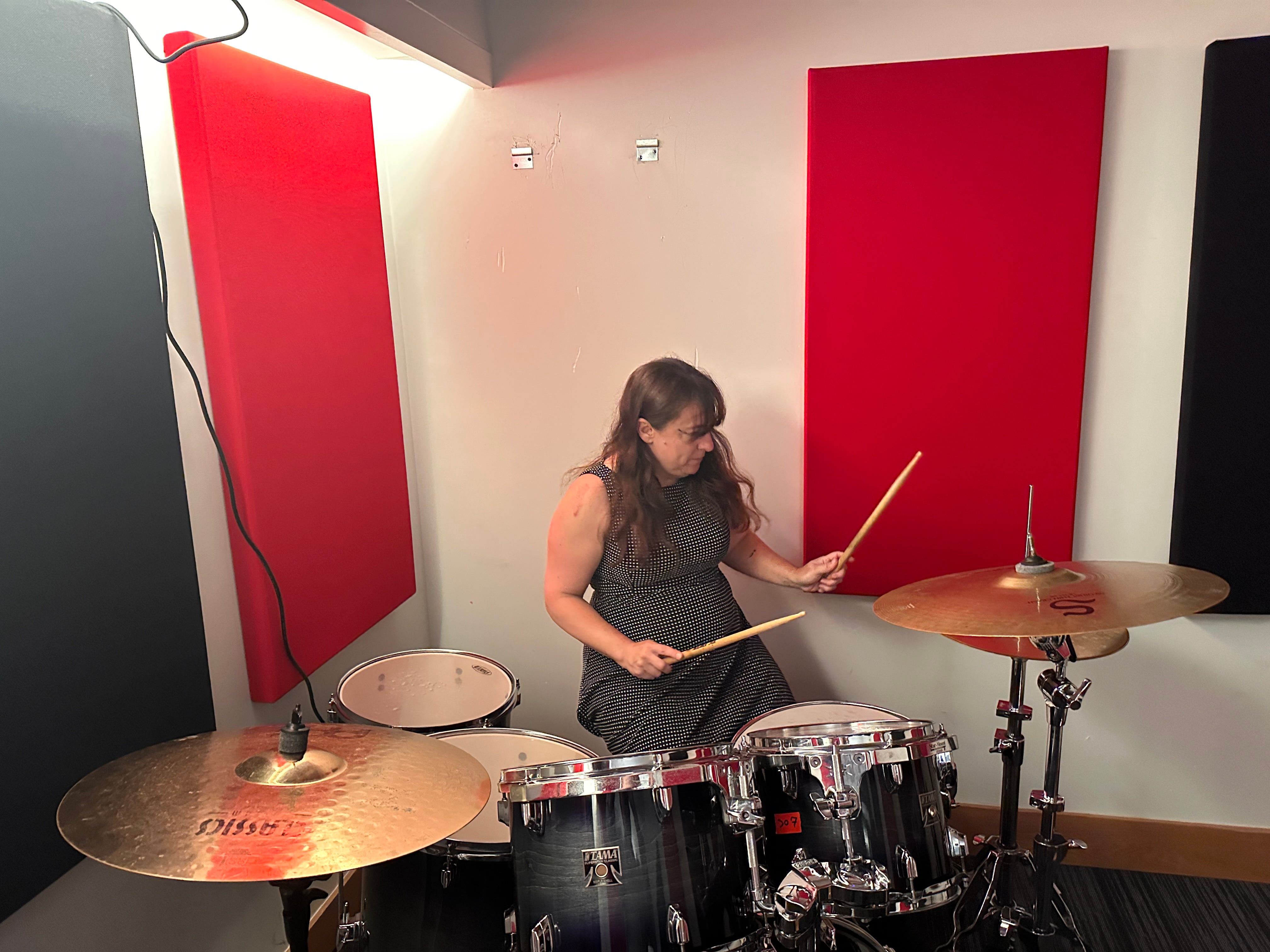
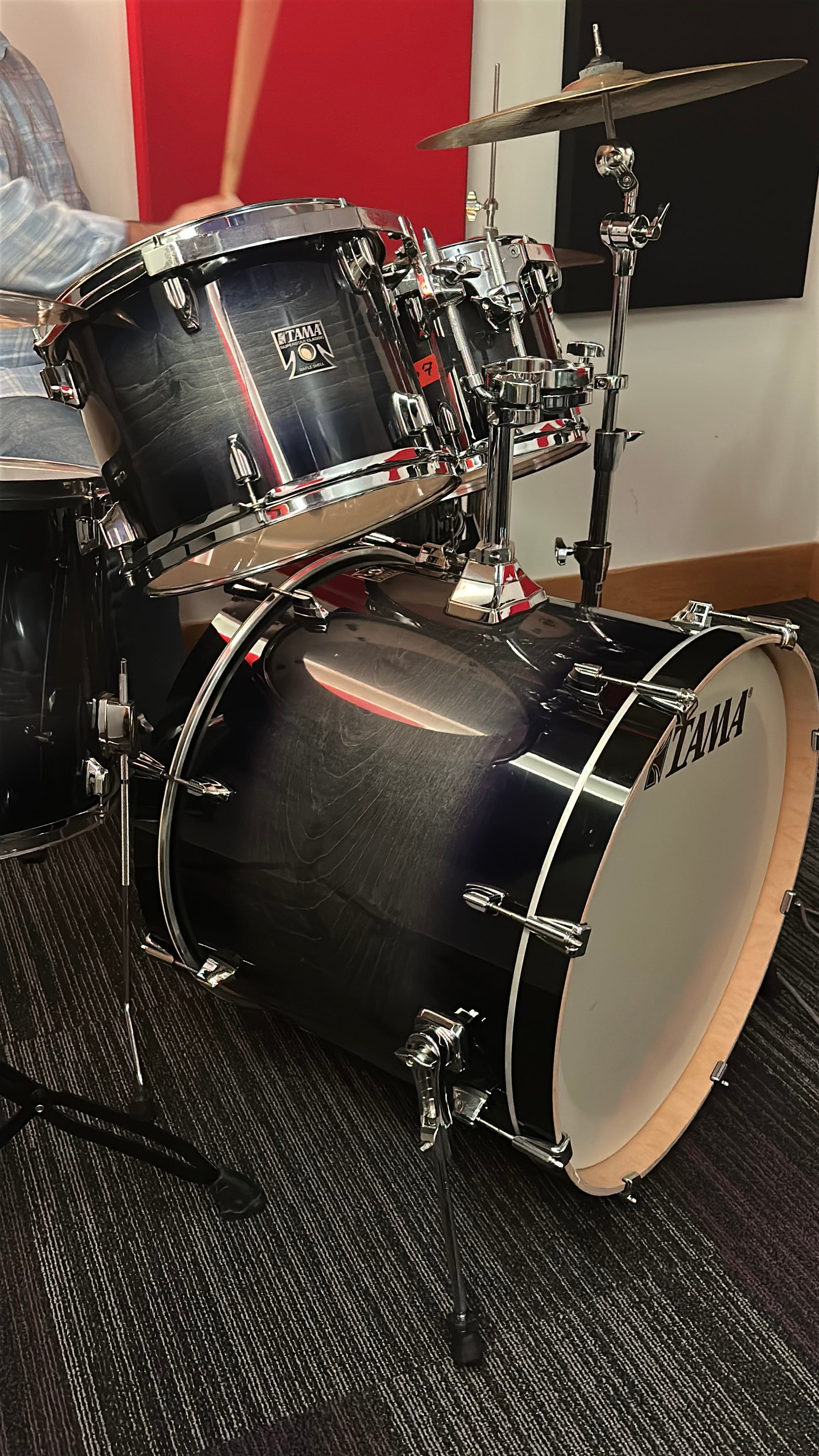
A good friend recently sent me this article by Tom Wright-Piersanti in The New York Times about rediscovering his joy in drumming. It immediately lit something up in me. Not just because I, too, have returned to practices I once thought I had outgrown. More than that, it was the simple truth at the heart of his story that stayed with me: the realization that he hadn’t stopped being a drummer just because he hadn’t played in a while.
That sentence held me.
In my work with artists, especially those navigating illness, trauma, caregiving, or chronic overwhelm, this question comes up often.
“Am I still a writer if I haven’t written in months?”
“Can I call myself an artist if I only create when I have energy left over?”
“Do I get to keep that identity if I’m not producing anything new?”
We talk so much about creative output, we can sometimes forget that creative being is something we carry even when the materials are untouched. Even when the pages are blank. Even when we’ve been away a long, long time.
Wright-Piersanti reminds us that sometimes it just takes one small, unexpected portal for that part of ourselves to rise again. It might be anything - a child’s drum set, a moment in the laundry room when the light hits just right. Not because we forced it, but because it never really left.
I have developed these ideas after decades of lived experience, interview-based insights, and deep research into the complex relationship between art and health. They are based on my unique 6-part framework and Creative Health Cartography. If you are interested in assistance in applying these ideas to your own life: Order a Creative Health Map.
Play Without Proof
There’s a purity to the way he describes sneaking in a few joyful minutes at the drum kit. No intention to perform. No need to improve. Just the giddy energy of making noise for its own sake.
That kind of creative presence, not goal oriented, attuned to pleasure, is rare in adulthood. Especially for those of us who’ve turned our creativity into our livelihood, or whose practices are bound up with recovery. We’re always being asked to prove something with our making. That we’re healing. That we’re progressing. That our art has value.
But what if the act of creation didn’t have to carry all that weight?
Winnicott called this kind of activity play. Not in the frivolous sense, but as a psychological space where experimentation and self-expression can exist without judgment. A space where we don’t have to be good. We just have to be with ourselves. Loosened. Alive.
When art returns in these moments, not as obligation but as spark, it’s a kind of quiet reclamation. Not a comeback. A remembering.
The Constraints Are Real
The article also makes a case for structured creativity: writing poems under constraint, solving problems with limitations in place. That is valuable. In fact, constraint-based creativity has deep roots in both literary history, like Oulipo and erasure poems, and in therapeutic art practices. It teaches us flexibility, focus, and the capacity to reframe.
But for many, constraints aren’t just a creative device. They’re lived realities.
Fatigue. Pain. Parenting. Structural violence. Executive dysfunction. Disability. These are not optional limitations we can play within. They are conditions we must move through daily. And so for some of us, the five-day challenge might not feel like an invitation to stretch creatively. It might feel like another way to measure what we aren’t doing.
That doesn’t mean the approach is flawed. But it does mean the frame needs to widen.
Constraints can inspire. But they can also overwhelm. The difference is how we’re met. Whether we’re offered permission to modify, to opt out, or to fail gently. Whether we’re reminded that creative identity isn’t lost when the exercise doesn’t get done. Whether we’re encouraged to let making feel good, not just productive.
Creativity as Capacity
What struck me most about the piece, beyond its sweetness, was its optimism. It reminds us that creativity is something you can practice, grow, stretch into. And I agree although perhaps with a caveat:
Creativity doesn’t live in one mood state. It doesn’t arrive only when we’re well-rested and inspired. It’s not always sparked by novelty. For those of us navigating trauma or grief, it can also be cyclical, fragmented, slow.
In the frameworks I return to (feminist psychology, trauma-informed art therapy, disability justice) creativity isn’t a light switch. It’s a relationship with our nervous system. A dialogue with capacity. A negotiation between what we want to express and what we have the energy or safety to hold.
That relationship changes. Sometimes dramatically. Sometimes it goes quiet for years. Sometimes it surprises us with its return.
But it never stops belonging to us.
You Don’t Have to Feel Inspired
If you’re holding an instrument you haven’t touched in a decade.
If you’re staring at a yarn stash you no longer know how to begin.
If you’re flipping through an old notebook, wondering where your voice went …
That is okay. You’re still a maker. You’re still an artist. You’re still a creative being.
Not because you’re producing. But because something in you still wants to feel.
Maybe that’s the deeper invitation: not to ignite a spark, but to trust that the fire never really went out. It’s just been waiting for a moment quiet enough to return.
If you got this far, perhaps you liked my work. The work takes work. Support it if you can:
You Might Also Like to Read:


You Might Also Find Helpful:
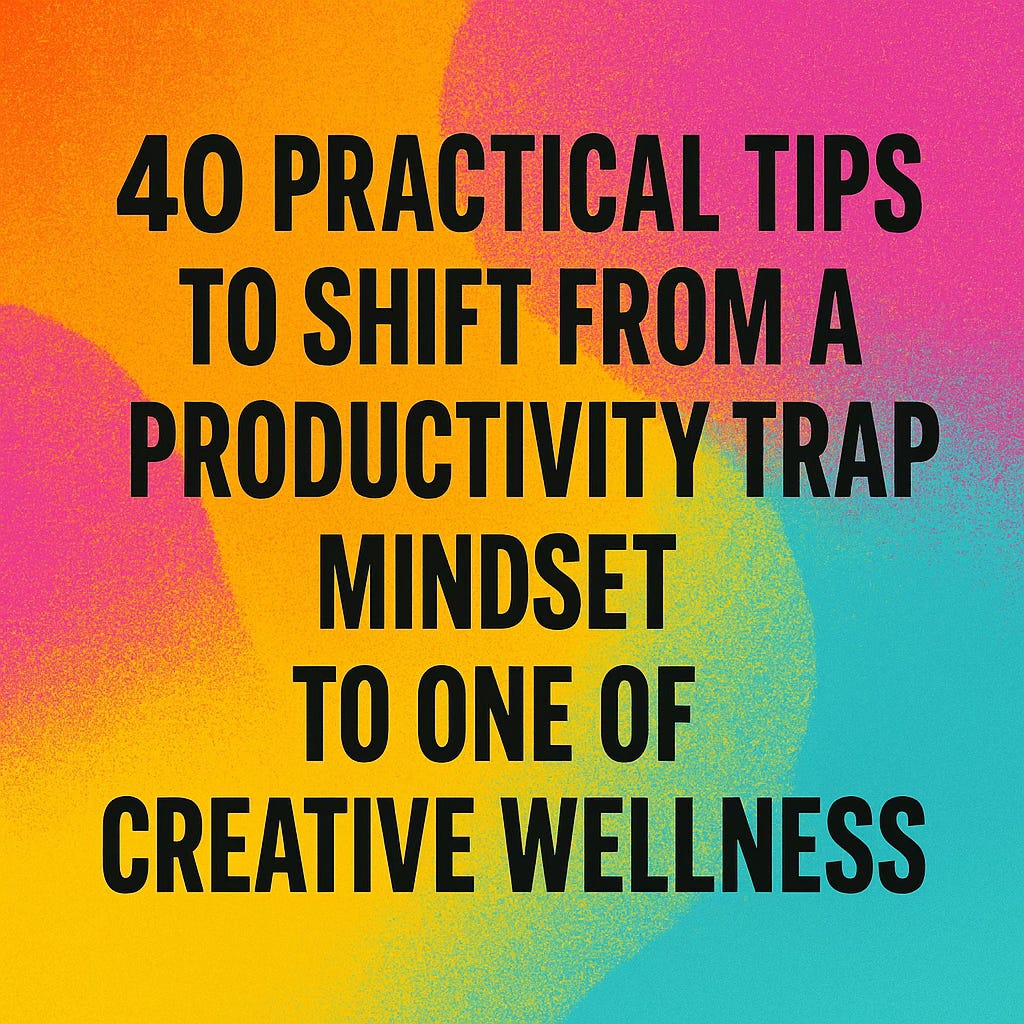
Are you tired of forcing yourself to create every day? Exhausted by measuring your worth through output? Ready to build a creative practice that actually sustains and nourishes you? This 26-page booklet contains 40 transformative mindset shifts that will help you.
This is such a rich topic to explore… and what I notice is an undercurrent of “creative” as an identity in our culture… a very western notion that we have to consistently “do” to be entitled to claim it.
For me, flipping it on its head to see creativity as the language of the heart (and our fire element), changed my relationship to it. What am I passionate about and love - those are my creative fuels and outlets. And when I work with clients, I ask what brings them joy, and they frequently go blank - as if they only know joy is in relationship to validation/service to others.
So we explore what they loved to do when they were younger… swing on the swings, color, blow bubbles, play in the waves at the beach…? I see these sweet memories as portals into our joy, creativity, and passion (all elements of the heart).