
Capacity Mapping: What It Is, Why It Works, and Why Time Management Was Never Designed for You
Creative capacity mapping starts from a different question than time management does, and for artists with fluctuating health, that different starting question changes everything.

Time management assumes that the problem is organizational. You have a certain amount of time. You have a certain amount of creative work to do. The question is how to use the available time effectively. The tools time management offers (schedules, time-blocking, priority systems, habit stacks …) are all designed to optimize the use of a resource that is treated as roughly stable: you have the same number of hours available today as you had yesterday, and the question is what you fill them with.
For artists with fluctuating health, this assumption is where time management starts to break down. The hours may be the same, but what those hours contain, in terms of cognitive clarity, physical capacity, emotional availability, and creative access, can vary so significantly from day to day that a plan built on yesterday’s capacity is frequently irrelevant to today’s reality. The schedule is respected; the body is ignored; and the gap between what was planned and what was possible produces a form of chronic self-criticism that compounds the health problem it was meant to work around.
Creative capacity mapping is a different approach to the same underlying challenge. It starts from what is actually available within any given block of time, and it builds creative practice around the full range of that availability rather than around an idealized version of it.
You already have the answers to unblocking your creativity. Find them with the help of a Creative Health Map.
What is Creative Capacity Mapping?
Capacity mapping originated in organizational and systems thinking as a way of assessing available resources against demand, asking what a system actually has to offer rather than what it is theoretically supposed to produce. In healthcare and project management, it functions as a planning tool: before committing to a schedule, you map real capacity. The chronic illness and disability communities adapted this logic into something more personal through frameworks like Christine Miserandino’s Spoon Theory, which gave people navigating fluctuating energy a language for the gap between what they had available and what a given day was asking of them.
I’ve taken both of these threads and applied them to creative practice specifically. Creative capacity mapping asks the same foundational question: what do you actually have available right now, and brings it to bear on the particular demands of creative work: the difference between generative work and revision, between high-stakes output and the smaller acts of tending a practice, between what a good day can hold and what a difficult one can still offer. The goal is a creative practice designed around the full range of a fluctuating body’s actual availability, rather than around a plan made from the best days and then held against all the others.
Why Time Management Was Never Designed for This
The most consistent problem I see in how artists with fluctuating health talk about their creative practice is the gap between the plan and the reality: the plan made from a good day, and the reality that most days are “good” days only in the number of hours they contain. Time management frameworks, even well-designed ones, tend to be built from a model of a person with stable capacity who needs help using their time more intentionally. They were designed for a person whose available capacity holds steady, rather than varying by a factor of three between a productive week and a difficult one.
The consequence is that many artists with chronic illness, mental health challenges, or other fluctuating conditions end up using time management tools to generate increasingly sophisticated plans that they then consistently fail to execute on their most difficult days, and the failure feels personal rather than structural. The tool was built for a different body. The body is blamed for failing the tool.
There is also a compounding problem that comes from designing a creative life around systems built for someone else’s nervous system. The creative rhythms that are real and functional, the brain that generates in spirals and bursts rather than in straight lines, the capacity that peaks at an hour in the afternoon rather than in the morning, the day that can offer thirty minutes of real creative engagement and nothing else: all of these get flattened by systems that cannot accommodate them, and then read as discipline failures rather than as accurate descriptions of how this body actually works.

What Creative Capacity Mapping Starts From
Creative capacity mapping starts from a different question: what kind of creative work is available to me at different levels of capacity? Rather than planning what to do with a given block of time, creative capacity mapping identifies the full portfolio of creative engagements across the range of what you actually have, from your highest-functioning days through your most limited ones.
This requires an honest assessment that time management never asks for.
What kind of creative work requires your highest cognitive engagement? For most artists, this includes generative work: first drafts, improvisation, the kind of open-ended exploration that produces new material. This work tends to need a relatively stable nervous system, some degree of physical comfort, and the quality of openness that is harder to access when health is significantly compromised.
What kind of creative work is available at medium capacity? This might include revision, structural work, research, planning, editing, responding to earlier material. These tasks are genuinely part of the creative practice but tend to be less demanding of the quality of presence that generative work requires. An artist who cannot generate new material on a difficult day might still be able to do real and valuable work in this range.
And what is available at low capacity? This is where many artists draw a blank, because they have been operating from a framework that treats anything below full creative engagement as not-working. But there are forms of engagement with the creative practice that are available even when very little else is: being with materials without requiring output from them, reading in the area of your creative concern, handling correspondence related to the work, organizing or preparing for future work sessions. These count. Building a practice that treats them as counting changes what it means to show up on a difficult day.
The low-capacity column is also where micro-creative acts belong. A quick sketch, three lines of poetry, a brief voice memo of an idea, the spontaneous humming of a melody: these are real creative contributions to an ongoing practice, and they become useful engagements when the alternative is measuring oneself against a full-session standard that is simply unavailable today.


What Spoon Theory Opened Up for Creative Practice
Christine Miserandino’s Spoon Theory, which emerged from her experience navigating lupus, gave disability communities a shared language for something artists with health challenges have long known but rarely had words for: energy is finite, non-negotiable, and invisible to people who have never had to count it. The spoon metaphor describes a daily supply of energy units, each activity costing some number of spoons, with the supply being significantly smaller for people navigating chronic illness than for people who are managing without it.
The contribution of Spoon Theory to creative practice thinking is the explicit acknowledgment that creative work costs spoons, and that the number available varies. It validates the experience of the artist who can produce freely on a good day and can barely cross the threshold on a difficult one, without attributing the difference to motivation, discipline, or commitment. The capacity is different. The spoons are different. The work that’s possible is different.
Johanna Hedva’s “Sick Woman Theory” takes this further into the political dimension that Spoon Theory opens. Hedva argues that the demand to be productive, visible, and present is built around a specific kind of body, and that illness and incapacity are political conditions rather than individual failures. The person who cannot show up, who cannot meet the productivity standard, is doing something other than failing. The standard is the thing that deserves examination. For creative practice, this reframing matters: the gap between what a fluctuating body can offer and what the creative culture demands is a structural problem, and building a practice that accounts for it is an act of accuracy rather than accommodation.
Creative capacity mapping builds on both of these frameworks by adding a question neither quite asks: given that capacity varies, what does that variation specifically mean for your creative work? What can be done with three spoons that couldn’t be done with ten? What becomes possible when the question shifts from “how do I get more spoons” to “what do I make with what’s actually here”?

Artists Who Built Methodology Around Actual Conditions
The history of artists working within and through severe constraint reveals a consistent pattern that creative capacity mapping points toward: the methodology built around actual conditions often produces more distinctive work than the methodology imposed on top of conditions the body cannot meet.
The artists who made work inside psychiatric institutions in the early twentieth century, figures like Aloise Corbaz and Martin Ramirez, developed methodologies that were inseparable from their constrained circumstances. The materials available, the time available, the quality of attention that institutional life both required and disrupted, all of these shaped the form and content of the work. Corbaz’s vast panoramic drawings, produced in secret on whatever paper could be gathered, and Ramirez’s intricate tunnel and rider images, created on surfaces assembled from whatever scraps were available, are among the most formally distinctive works of their century. The constraint was the methodology. The methodology produced the work.
This is what Sara Ahmed names in Willful Subjects as the possibility contained in refusal: the body that refuses to comply with what is asked of it, that insists on its own conditions rather than the conditions imposed, is asserting a different understanding of what is possible and what is required. Applied to creative practice, the artist whose body refuses the productivity standard, who cannot meet the time management plan, who consistently offers something other than what was demanded, may be offering the only thing that is available, and that thing may be considerable.

What Becomes Available When You Create With the Body Rather Than Against It
There is a quality of creative engagement that becomes possible when the body is treated as a collaborator in the work rather than an obstacle to be managed around it. This differs from the quality of engagement produced by override, and it tends to show up differently in the work itself.
Writing with the body means beginning from where the body actually is: the quality of sensation, the specific quality of fatigue or pain or flatness or unexpected aliveness that is present today, rather than the quality of presence the plan assumed would be available. This starting point produces work that is differently specific, differently textured than work produced by pushing toward a planned outcome from a disconnected body. The work that emerges from genuine bodily presence, even limited bodily presence, tends to carry something that planned work produced through override rarely does.
For artists navigating physical pain, illness, or significant depletion, this is less a method than a survival strategy: when the body’s conditions cannot be changed, the work can be built from them rather than against them. The pain becomes part of the working material. The limitation becomes part of the methodology. The constraint shapes the form. This is a description of how some of the most formally precise and emotionally specific creative work in the record has been made.

If you want to explore your own creative capacity, that’s exactly what Creative Health Cartography surfaces.
Want a great free place to get started? Take a free, no strings attached, quiz to learn your Creative Health Archetype.
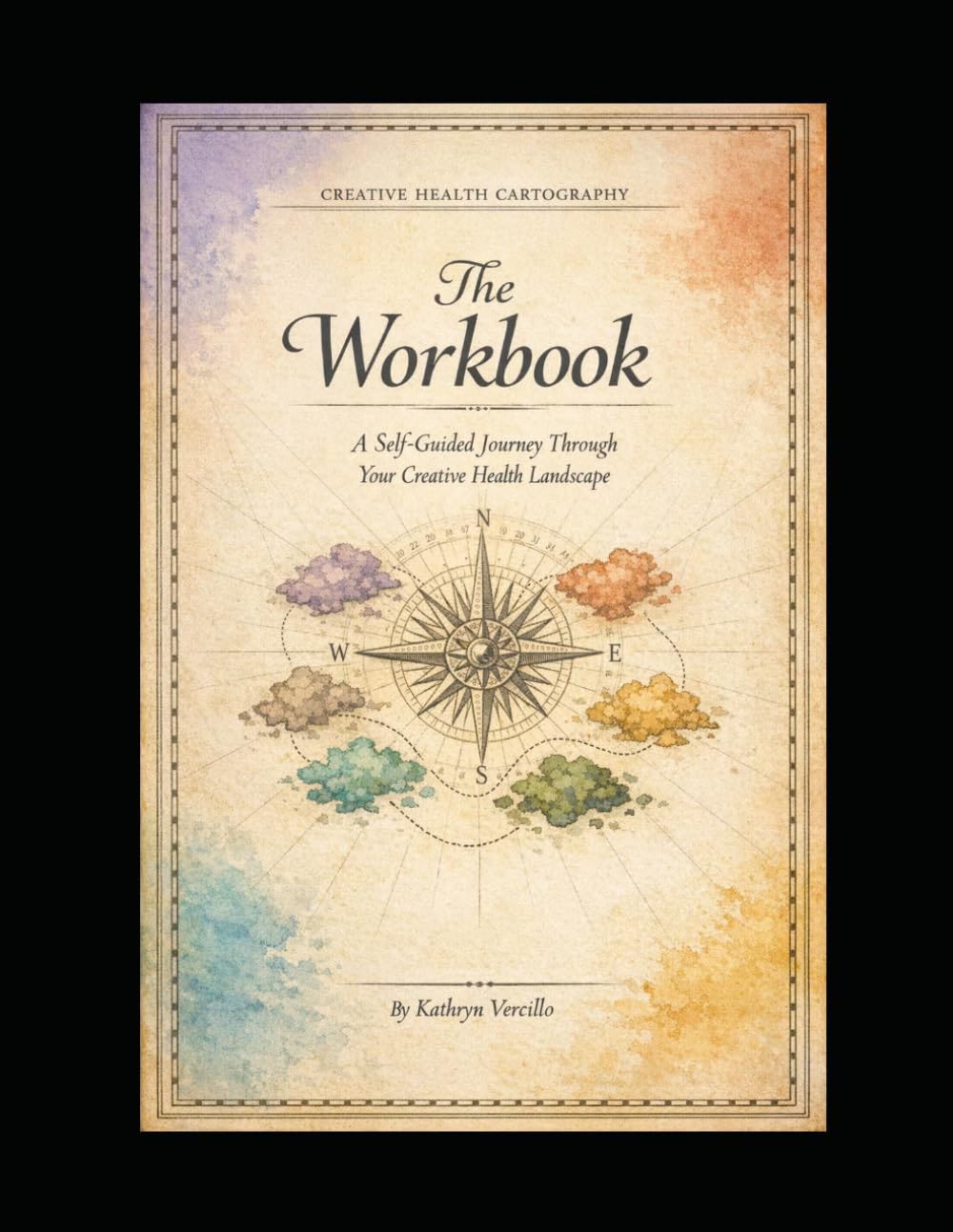
Or use the Creative Heath Cartography Workbook to go deeper:
Writing From Others …
With gratitude for the words you share to Michelle Rial, Kate Broughton, Shanetta McDonald, Eugene Toh and Steph Wright


I love your newsletter because it's constantly giving me new language to describe my experiences and a different framework to view them through. I love the term capacity mapping in place of time management, taking more into account how the way we move through time shifts depending on our capacity.
This is a wonderful article, and it's so obvious when someone tells you, but oh my do I need telling repeatedly! To listen to the body rather than rigidly stick to plans. How freeing this is.