
The real reason you can’t stick to a creative habit
Traditional advice lets too many of us down. A guest post from Allegra Chapman.


I am thrilled to have a guest post for you today from Allegra Chapman. She shares critical lived experience information about the creative life as a neurodivergent person. Follow the link at the end of the post to participate in Allegra’s 5 Day Challenge for Building a Sustainable Creative Habit.
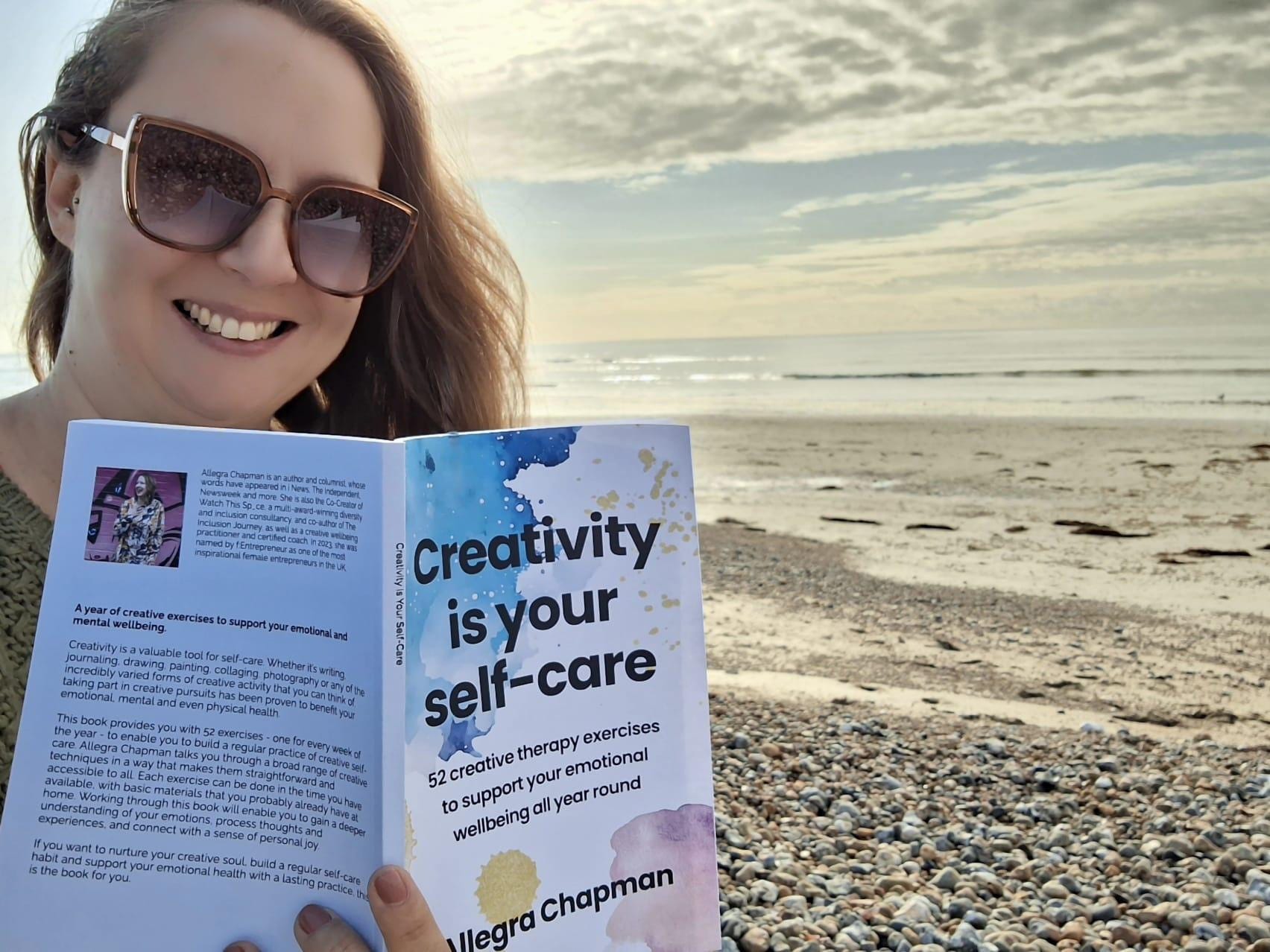
This is a guest post from Allegra Chapman. Allegra is an author, columnist and AuDHD dissident, whose words have appeared in The i, The Independent, Newsweek, Cosmopolitan, and many more. As a creative therapy practitioner and creative coach, she is passionate about empowering and championing neurodivergent, disabled and chronically ill writers and artists, supporting them to reclaim their voices and share their perspectives. She shares creative therapy resources and tools at yourcreativefix.substack.com. Her latest book, Divergent Creatives, is a manifesto for those who don’t fit society’s boxes to take back their creative power, and is available now everywhere you get your books.
I tried to do The Artist’s Way three times, and never made it past halfway.
I’ve taken a bunch of writing courses, and creativity programmes, and read so many productivity books. None of it ever seemed to stick. I just couldn’t follow any of the advice.
Which is why, at the age of 27, when I looked round at all the unfinished short stories, the two half-finished novels, and the stack of rejections I’d amassed, I told myself I just wasn’t cut out for life as a creative.
I had wanted to be a writer from the age of 6—pretty much from the time I could write my name. I’d won a few competitions as a child, had a few pieces published, but something just wasn’t working.
I assumed I was the problem. Other people were more dedicated, more disciplined, more talented. I just couldn’t do it.
Best to give up.
Flash forward 15 years, and now I’m 42. I’ve just published my third book. I write columns for national and international newspapers and magazines. I’m living a life that I never would have believed possible back then. But it took me until my late 30s to figure out how to make it happen.
Traditional advice is ableist
The missing piece of the puzzle was that I am neurodivergent. Finally figuring out my AuDHD when I was around 36 changed everything. It made sense of why I hadn’t been able to stick to any of the practices I’d been taught—none of those approaches were designed for me. None of them suited my brain and my needs.
Most creativity advice and most productivity guidance isn’t designed for neurodivergent people. Or disabled people. Or people living with chronic illness, or caring responsibilities, or any other life challenges. Because it isn’t designed by those people.
I worked for a few years as an Editor in the publishing industry, and that showed me exactly why creative spaces are dominated by white, wealthy, privileged people. It is almost impossible to survive working in those fields unless you have a rich family behind you and a bunch of high profile connections beside you. I had neither, and I had to drop out. I couldn’t afford to work in publishing, and I’m not alone. And if the gatekeepers are predominantly from privileged backgrounds, they will, of course, commission work that speaks to their experience of the world. So the books we read, the art we consume, is mostly created by people from privileged backgrounds.
Including the books about how to be a creative.
It will never work for you
If you are a neurodivergent person, there is no point in trying to make art like a neurotypical person. It just won’t work.
The neurotypical approach stresses discipline, motivation, routine, pushing through… and these are all more likely to make a neurodivergent person shut down completely.
Kathryn has written a fantastic guest post for my Substack on the relationship between the nervous system and creativity, which helps you understand how and why creative resistance happens when we are overwhelmed. Overwhelm can, of course, happen to anyone, no matter their neurological wiring. But if you are neurodivergent, or disabled or chronically ill, your system is already under strain.
If your system is feeling constantly assaulted by sensory overload, if you’re struggling to navigate a world that is confusing and requires ongoing translation, if you’re using up what reserves of energy you have just to make it out of bed… it doesn’t take much to tip the scales over into full-on burnout.
When we push ourselves to “be more disciplined”, our systems read this pressure as danger. That puts us into fight/ flight/ freeze mode, and we begin procrastinating, avoiding or retreating in an attempt to escape that danger.
That doesn’t mean that routine or habit can’t be useful. Some people respond incredibly well to structured routines; for some people, they are absolutely vital. For others, though, routines can feel suffocating. It’s important to understand which is true for you, and to build a creative practice that meets your unique needs.
Regardless of your relationship with routine—whether you need structure or flexibility—you will almost certainly never be able to stick to a creative practice unless it supports your nervous system.
Sustainable creative habits
There is a lot of attachment to the idea of discipline and pushing through in creative spaces. When I talk about letting go of discipline and pressure, I’m always surprised by how many people get angry.
We’ve been so conditioned to think that nothing good can happen if we don’t flog ourselves half to death, that challenging that concept feels dangerous to a lot of people. Sometimes, too, resistance will surface because we’ve already spent a lot of time pushing ourselves really hard—in our creativity, in our careers, in our relationships—and stretching way beyond our capacity, that if we accept that cycles of overgiving -> burnout -> recovery -> over-giving aren’t the best way, then we have to face the possibility that maybe we didn’t have to do all that. Maybe the path of the meek martyr isn’t the ultimate badge of honour that we’ve been led to see it as. That involves rethinking a lot of stuff, and some people simply do not want to deal with all that.
I get that. Life is a lot already. If you don’t want to start unpicking your relationship to practice and disciplines, I do not blame you.
However, if you’re tired of burning out, tired of never feeling like you can focus on your creativity, tired of not finishing things, not feeling able to move forward in the way that you want to, then maybe you’re ready to work in harmony with your nervous system.
This doesn’t mean abandoning any semblance of routine or organisation. If you want to move forward with a creative project, or just make creativity a regular part of your life, then you need to be able to show up with some kind of regularity, even if that is flexible and adaptable. But your brain will only agree to show up regularly if it feels safe to do so and excited about the prospect.
How do you create a space where your system feels safe and encouraged to create? I go into this in detail in my new book, Divergent Creatives, but some elements include:
Responding to your needs in the moment and adapting the work you do to meet those needs
Setting small and manageable goals that focus on the process rather than the outcome
Using rituals or habits to mark the opening and closing of your creative time to ease the transition into and out of that mindset
Recognising what does and doesn’t work for you, and giving yourself permission to respond accordingly
Celebrating your progress and acknowledging yourself for showing up—give yourself the dopamine that encourages you to come back again next time
Giving yourself plenty of rest and space to dream, rather than constantly pushing for productivity
Only when your needs are met and your nervous system is regulated can you build a creative habit that is truly sustainable.
If you want to know what this looks like in practice, I’m hosting a FREE 5-day experience to show you how you can weave a sustainable creative habit into your everyday life.
From 18th - 22nd May, I’ll be guiding you through the process of understanding and responding to your nervous system, and holding space for you to create for just 10 minutes each day. You don’t have to show up every day, you can do it all on your own schedule, and, I promise, you’ll be amazed at what you achieve in short windows of time when you work in harmony with your needs.
Sign up for the free Creative Reset here: https://mailchi.mp/creativefix/challenge
 | A guest post by
|
Thank you for sharing all of this. I'm fairly new to Substack, which I started alongside beginning a regular creative practice again after years of feeling like I couldn't.
It follows several fairly tough years as I navigated early motherhood, discovering my daughter is AuDHD, discovering I'm also AuDHD, and home educating her as the mainstream school system isn't built for and is, in many cases, extremely detrimental to neurodivergent children's health and wellbeing.
My whole working life before my daughter was born, around twenty years or so, was a repeated cycle of burnout without the knowledge of being neurodivergent. Sharing my creative practice on Substack is a way of gently finding out how I can show up again in the world in ways that works for me. It's definitely a work in progress, and I look forward to reading more of your work, Allegra. x