

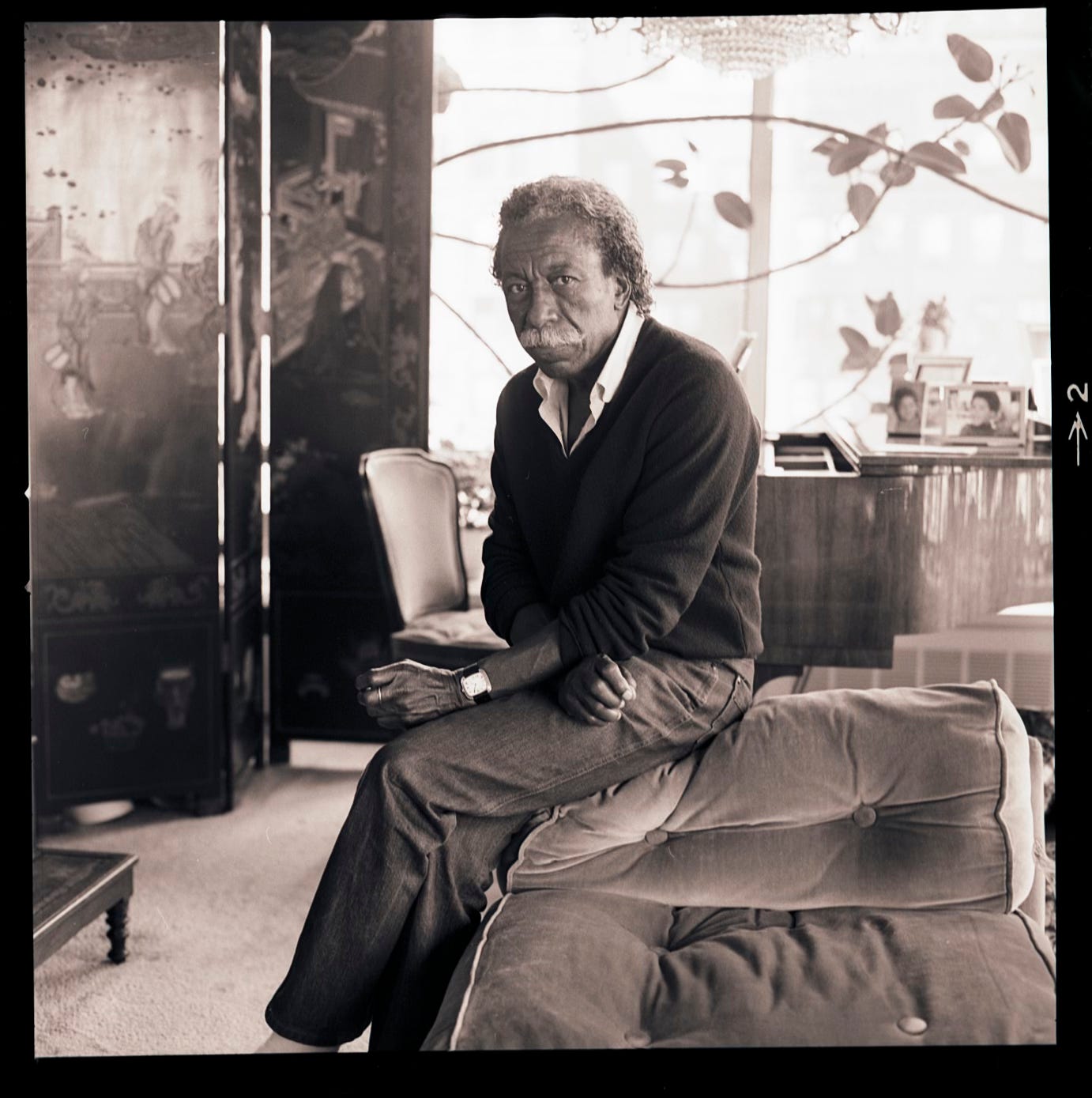
Gordon Parks bought his first camera at a pawnshop in 1938. He was twenty-five, living in Chicago, working as a waiter and a piano player. He had no formal training. He had seen a photo essay on migrant workers during a break at work and felt the force of what a photograph could do.
Within three years he had his first major exhibition and the Julius Rosenwald Fellowship. Within ten he was the first Black staff photographer at Life magazine.
He was about to spend the next sixty years building one of the most deliberately diversified creative careers in American cultural history, by necessity.
The full story of how Parks built multiple income streams as a Black artist navigating systemic exclusion, each stream, what it provided, what it cost, and what it made possible, continues below for paid subscribers.
This work takes work. Support it if you can.
