

Dear artist who feels guilty for needing rest after intense creative work,
Dear dancer whose energy disappears completely after a day of deep creative flow,
Dear writer who judges yourself for not being able to maintain consistent creative output,
Dear creative whose brain feels like static after hours of focused making,
Dear maker who worries that needing recovery time means you're not cut out for this work,
Dear artist who crashes so hard after creative sessions that you avoid them entirely,
Dear human whose creative intensity is followed by days of feeling empty and disconnected,
This is for you.
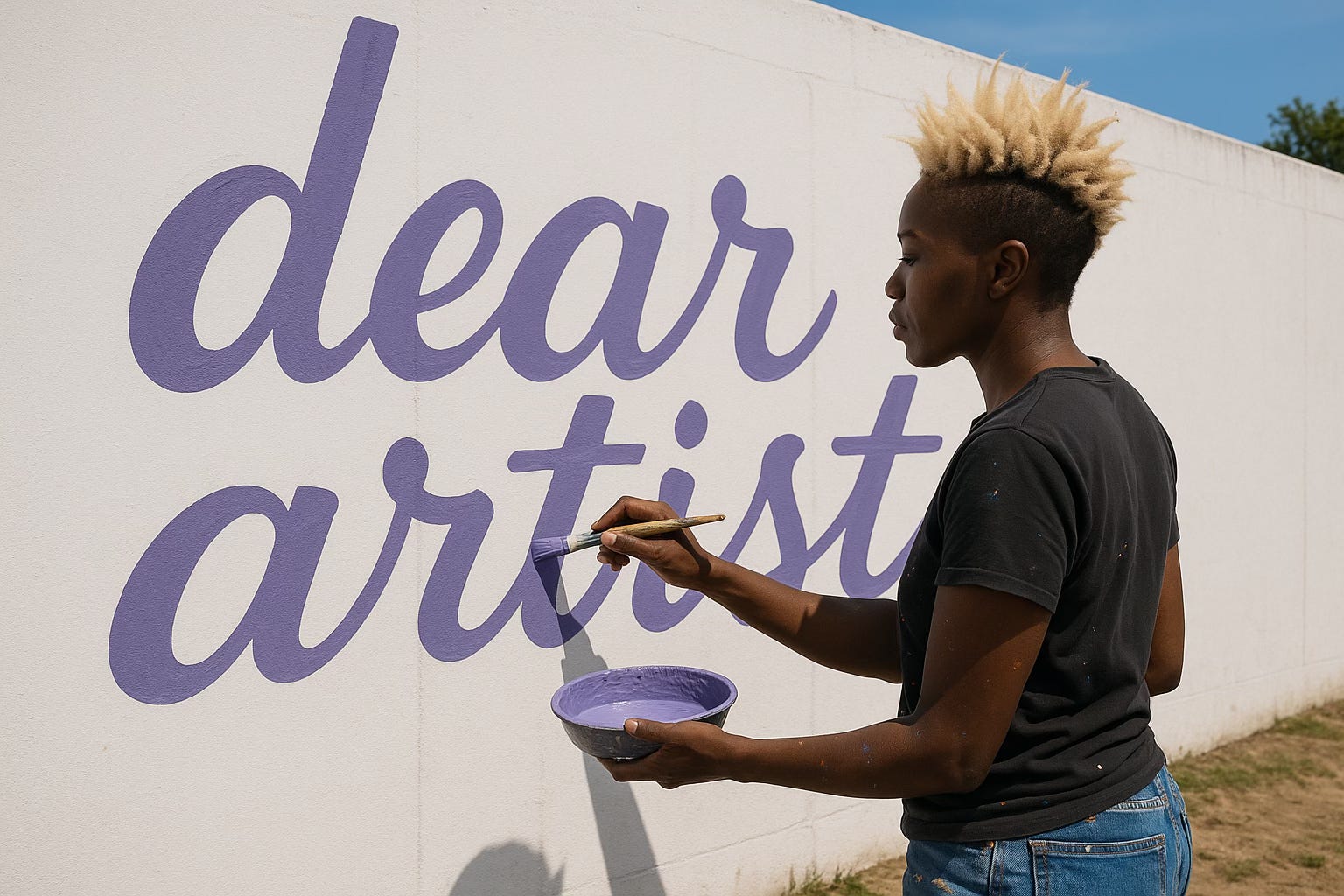
Your need for recovery after intense creative work is not a character flaw, a sign of weakness, or evidence that you're doing creativity wrong. It's your nervous system responding intelligently to the enormous cognitive and emotional demands of deep creative engagement.
Please know that these feelings are incredibly valid. The shame you feel about needing rest, the guilt about not being able to create consistently every day, the worry that "real" artists don't experience these crashes, all of these responses make complete sense given the messages our culture sends about creativity and productivity.
You are navigating a complex landscape where intense creative work is celebrated but the natural consequences of that intensity are rarely acknowledged. We hear about the artist who painted for twelve hours straight, but not about the three days of exhaustion that followed. We celebrate the writer who produced a novel in a month of intensive work, but not the recovery period they needed afterward.
What you're experiencing has a neurological basis that has nothing to do with your dedication or talent as an artist. When you engage in deep creative work, multiple complex brain networks are firing simultaneously. You're processing information, making novel connections, sustaining focused attention, and often accessing emotional content that requires significant psychological resources to navigate.
This kind of sustained cognitive activity depletes neurotransmitters and exhausts the very brain chemicals that support mood, motivation, and mental clarity. Your crash isn't a personal failing. It's your brain needing time to restore the neurochemical balance that makes creative work possible.
Your struggle with this is a testament to how deeply you care about your creative practice and how fully you engage when you're creating. The intensity of your crashes often reflects the intensity of your creative commitment. Artists who create more superficially don't experience these same dramatic shifts because they're not demanding as much from their cognitive and emotional systems.
What if your need for rest after creative work isn't a bug in your system but a feature? What if the crash you experience is actually your psyche's way of integrating the creative work you've just completed?
Many indigenous cultures understand rest and recovery as essential parts of any meaningful work. The idea that we should be able to produce consistently without regard for natural cycles of energy and depletion is a relatively recent invention of industrial culture, not a truth about human creativity.
Consider that during your recovery periods, your subconscious mind continues processing the creative work you've been doing intensively. Solutions to creative problems often emerge during these quieter times, not despite them but because of them. The crash isn't the absence of creativity; it's creativity happening in a different mode.
Your body and brain are asking for what they need to sustain your creative practice over the long term. Honoring these requests isn't giving in to limitation; it's working skillfully with your actual creative capacity rather than fighting against it.
What if you approached your creative practice the way a wise gardener approaches their garden, understanding that periods of intense growth need to be balanced with periods of rest and restoration?
You might experiment with planning for recovery time rather than being surprised by it. When you know you're entering an intensive creative period, you could prepare the way a thoughtful person prepares for any demanding experience: by ensuring you have comfortable clothes, nourishing food, and gentle activities available for afterward.
Instead of judging the crash, you might try receiving it as information about what your creative practice needs to remain sustainable. Your exhaustion is your system telling you something important about its limits and requirements.
You could also experiment with creating in shorter, more sustainable bursts rather than marathon sessions. This isn't about limiting your creative potential; it's about finding ways to access that potential regularly rather than in unsustainable peaks followed by valleys of depletion.
In a culture that equates worth with productivity, choosing to rest when your body and mind need it becomes a radical act. Your recovery time isn't laziness; it's a refusal to participate in systems that demand endless output without regard for human sustainability.
Every time you honor your need for rest after creative work, you're creating space for a different model of artistic practice. You're demonstrating that creativity can be both intense and sustainable, that meaningful work doesn't require self-destruction.
Your willingness to crash and recover, to work intensively and then rest deeply, may actually be protecting something essential about your creative authenticity. Artists who never allow themselves to be vulnerable enough to need recovery may also never allow themselves to be vulnerable enough to create work that truly matters.

You are still an artist when you need three days to recover from one day of intensive creating. You are still an artist when your energy comes in waves rather than steady streams. You are still an artist when you can't maintain the consistent output that productivity culture demands.
Your creative capacity isn't measured by your ability to produce constantly but by your willingness to engage authentically with the creative process, including its demands for both intensity and rest. The quality of presence you bring to your work matters more than the quantity of hours you can sustain.
The artists whose work endures over decades aren't necessarily the ones who create most consistently, but the ones who find ways to honor both their creative fire and their human need for restoration. You're learning to be one of those artists.
What you're experiencing, these intense creative periods followed by necessary recovery, may actually be your psyche's way of protecting both your art and your wellbeing. You're not broken for needing this rhythm; you're demonstrating a sophisticated understanding of what sustainable creativity requires.
Your crashes contain information about what your creative practice needs to remain authentic and nourishing rather than depleting. Instead of viewing them as obstacles to overcome, you might experiment with receiving them as guidance about how to structure your creative life in ways that serve both your art and your humanity.
Trust that your body and brain know something important about what your creativity needs to flourish over the long term. Your willingness to honor these needs, even when they don't match cultural expectations about how artists should work, is a form of creative wisdom that serves not just your own practice but the broader understanding of what sustainable artmaking can look like.
You deserve a creative practice that nourishes rather than depletes you, that works with your natural rhythms rather than against them, that honors your full humanity rather than demanding that you transcend your human needs.
With deep respect for your creative courage and complete faith in your ability to find the rhythms that serve both your art and your wellbeing,
A fellow artist who has learned that crashing and recovering is part of creating sustainably, not evidence of creative inadequacy,
Kathryn


